The tide decides when anyone leaves piece 1 of 5
The tide decides when anyone leaves
Off Vilankulo the channel drains twice a day, grounding the dhows on exposed sand until it fills again — and the coast runs its business accordingly.
- Spring tide range in this channel can exceed two metres
- the sandbanks emerge wide and flat
- High water shifts roughly fifty minutes later each day, following the lunar cycle
- Spring tides peak after new and full moons; neap tides (shallower range) follow the quarter moons
- A twenty-minute misjudgement on the ebb can strand a crew for four to five hours
What the channel does
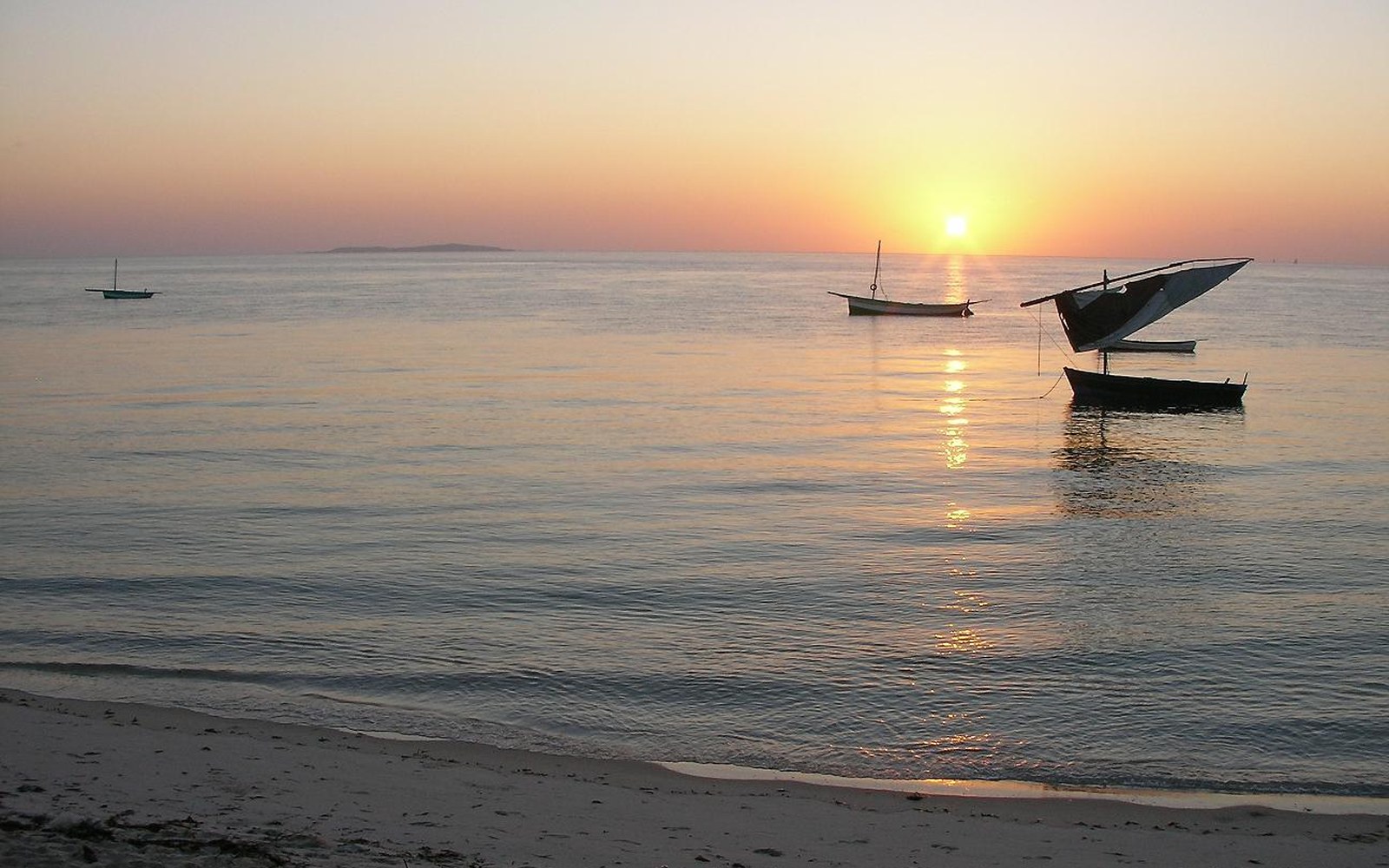
The Bazaruto Archipelago sits roughly twenty kilometres off Vilankulo, close enough that on a clear morning the pale silhouette of the islands sits on the horizon like a low shelf of cloud. Between the town and that shelf lies a shallow channel — at low tide, parts of it drop below half a metre, and the sandbanks that emerge are broad and flat and bone-white. The dhows that work this stretch are built for it: shallow-drafted, lateen-rigged, their hulls riding close to nothing. But even a shallow hull needs water underneath it, and twice a day the water mostly goes.
The tidal range here varies seasonally but can exceed two metres on spring tides, and the geometry of the channel amplifies the effect. Water drains seaward fast enough that a crew who misjudge the window by twenty minutes can watch the sand come up around the keel while they are still trying to leave. The boat settles. It will not move again for four or five hours. There is nothing to do but wait.
This is not an inconvenience layered over a normal working day. It is the working day. Departure times, return times, the moment when fish land at the market and the moment when they do not — all of it keys to the tide table rather than the clock. A fisherman off Vilankulo holds the tidal rhythm the way a city office worker holds a train schedule, with the same detailed knowledge of the edge cases: which route stays navigable longest on the ebb, which sandbank to take the outside of, how much freeboard you need to attempt the passage with a loaded hold.
The tidal range here varies seasonally but can exceed two metres on spring tides, and the geometry of the channel amplifies the effect.
The dhow and its logic
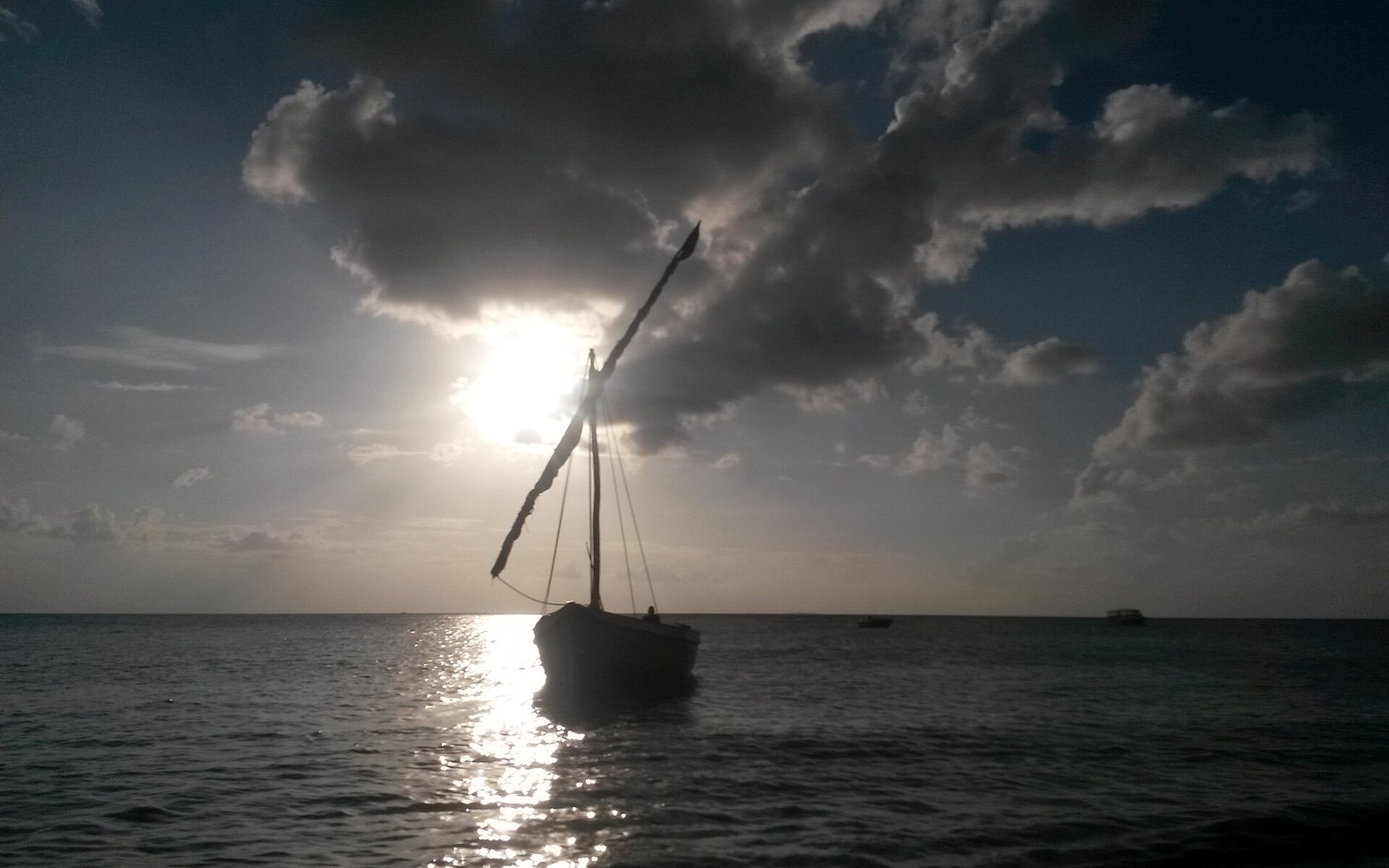
What a dhow actually is takes some explaining to someone who has only seen a photograph. The lateen sail — a triangular canvas set on a long yard that angles sharply upward — catches wind from almost any direction once the crew know how to trim it, but it cannot be hurried. The tack is a deliberate manoeuvre. Speed through the water is real but modest. All of which means that a dhow's relationship with the tide is not something that can be managed with a burst of horsepower. The tide is the senior partner in every negotiation.
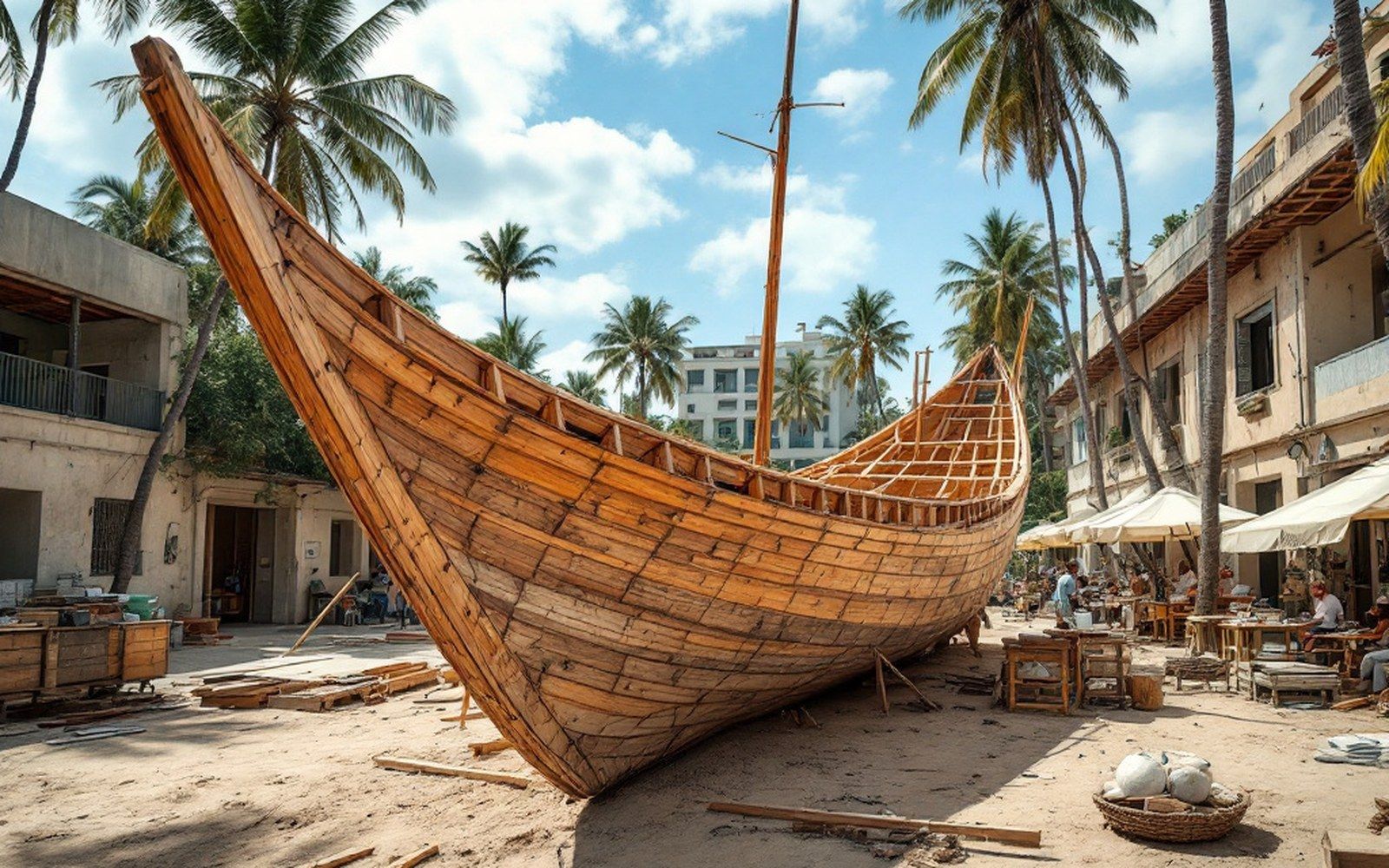
The dhows working the Vilankulo channel are mostly smaller craft — piroscafos and outrigger types alongside the classic ngalawa — handling fish, crab, and sometimes passengers across to the archipelago. A few carry cargo. Planks are fitted by eye and fastened in ways that look improvised but encode generations of knowledge about which woods flex and which hold firm. The caulking, driven in with a mallet along each seam, keeps the hull floating without any mechanical assistance. When a boat sits on the sand for a tidal cycle, the crew checks the caulking. That is part of the rhythm too.
Wind seasons
- Vento sul (southeast trade wind)
- roughly May to August; strong and choppy in the shallows
- Northwest monsoon season
- November to March; flatter seas, higher cyclone risk
The Bazaruto Archipelago that these boats work toward is a chain of five main islands — Bazaruto, Benguerra, Magaruque, Santa Carolina, and Bangué — protected as a national park since 1971 and designated a UNESCO Biosphere Reserve. The shallow banks between them and the mainland support dugongs, sea turtles, and a reef fish population that the boats have been harvesting, in one form or another, for centuries. The park's designation now restricts commercial fishing inside its boundaries, which pushes effort back toward the channel itself, making the tidal window matter even more: more boats, the same narrow passage, the same twice-daily drain.
Reading it right
A tide table is available — Mozambique's Instituto Nacional de Hidrografia e Navegação produces them — but most of the fishermen working this channel do not consult a printed table. Tidal prediction at this level is empirical: you know roughly when high water fell yesterday, you add fifty minutes for today, and you adjust for the phase of the moon. Spring tides run after new and full moons; neap tides, which are shallower and gentler, follow the quarters. A crew that has worked this channel for a decade carries a lunar calendar in their head without thinking about it as such.
The practical consequences cascade outward from the boat. Women processing and selling fish at the Vilankulo market time their morning around the expected arrival of the catch. If the fleet is grounded by an early ebb, the market thins. Buyers adjust. A small informal economy of waiting has grown up around the channel's edge — tea, food, shade — because the people who need the boats to move know how often they do not. The channel's indifference is also a kind of equality: it grounds everyone identically, the experienced captain and the novice alike.
The caulking, driven in with a mallet along each seam, keeps the hull floating without any mechanical assistance.
Weather complicates the calculation. The southeast trade wind, known locally as the vento sul, blows hard between roughly May and August, kicking up a chop in the shallows that makes a low-tide passage rougher even when there is technically enough water. The northwest wind season, from November through March, brings the rain and flatter seas but also the cyclone risk that concentrates at the height of southern hemisphere summer. There are windows within windows. A tide that is right can still deliver a crew into a wind that is wrong, and they will know this before they push off.
The boats that do not make it back before the ebb anchor where they are, their hulls tilting as the sand rises to meet them, the crews sometimes sleeping aboard. From the shore this looks like stillness, a fleet at rest. It is really just the tide having the last word, as it always does, until it changes its mind.