The tide decides when anyone leaves piece 5 of 5
What a dhow actually is
- lateen sail
- triangular sail suspended from an angled yard; allows sailing across the wind, not only downwind
- lapstrake
- hull construction with overlapping planks
- carvel
- hull construction with edge-to-edge planks on a frame
- ngalawa
- small outrigger variant used close inshore on the Mozambican coast
- coir
- coconut-fibre rope, used in the older sewn-plank construction tradition
A lateen rig, a shallow hull, a working boat
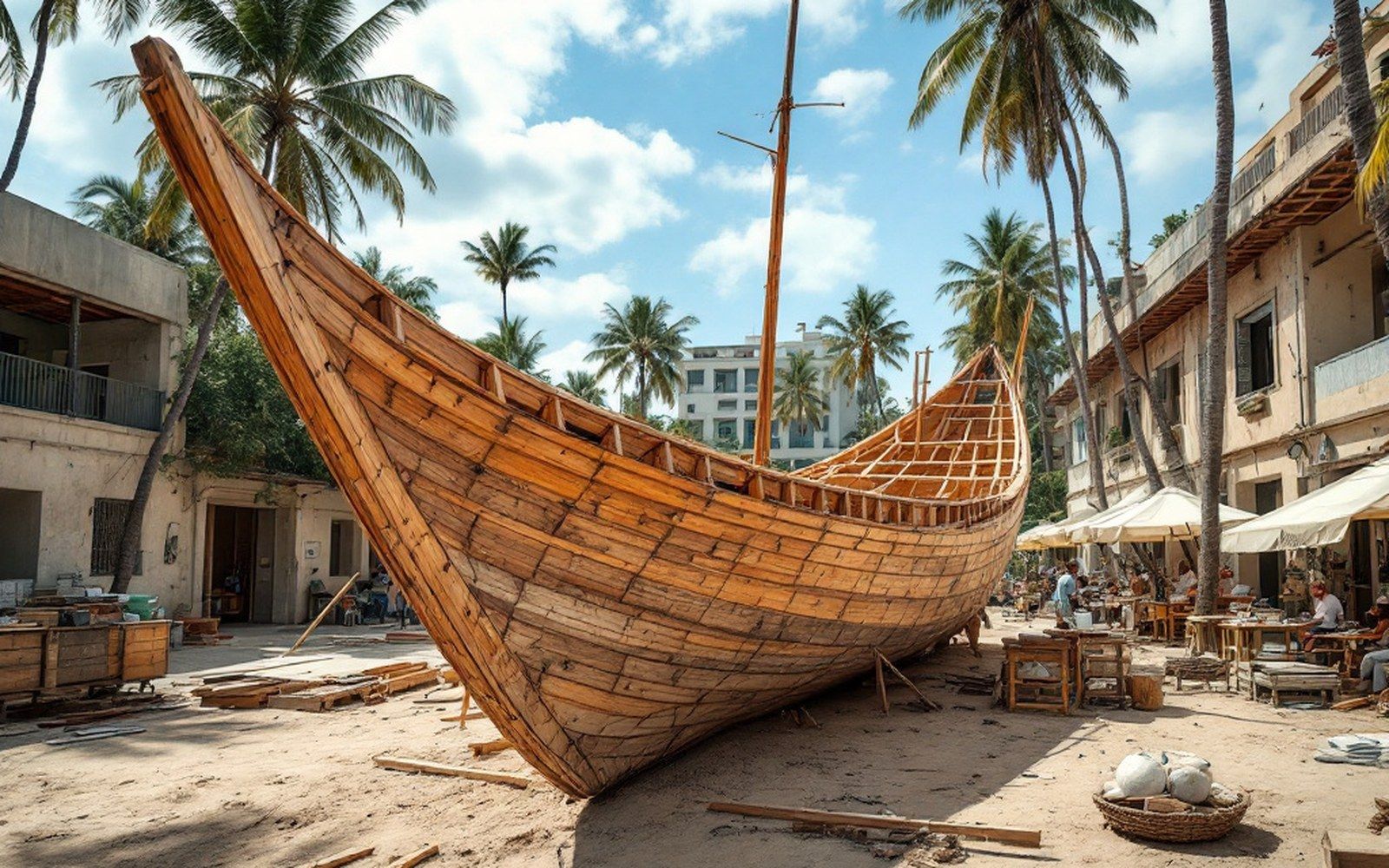
The word gets loose use. It appears in travel writing as shorthand for anything wooden, foreign and afloat in the Indian Ocean, which means it has been applied to vessels of wildly different sizes, construction methods and origins. On the Mozambican coast, a dhow is a specific thing: a timber-hulled sailing boat built without a keel, rigged with a lateen sail — a triangular canvas suspended from a long yard that angles sharply up from the mast — and used for the practical movement of people, fish and cargo between islands, across estuaries and along the shore.
The lateen rig is the defining feature. Unlike the square sails that drive a vessel downwind, a lateen allows the boat to work at an angle to the wind, which matters enormously on a coast where the prevailing conditions change by season. The southeast trade winds run reliably from roughly May to October; the northwest monsoon reverses direction from November through March. Dhow sailors have organised the rhythm of their year around this reversal for centuries. The rig is old — evidence of lateen rigging in the western Indian Ocean reaches back over a thousand years — but it has not been replaced here because nothing cheap and simple does the job better.
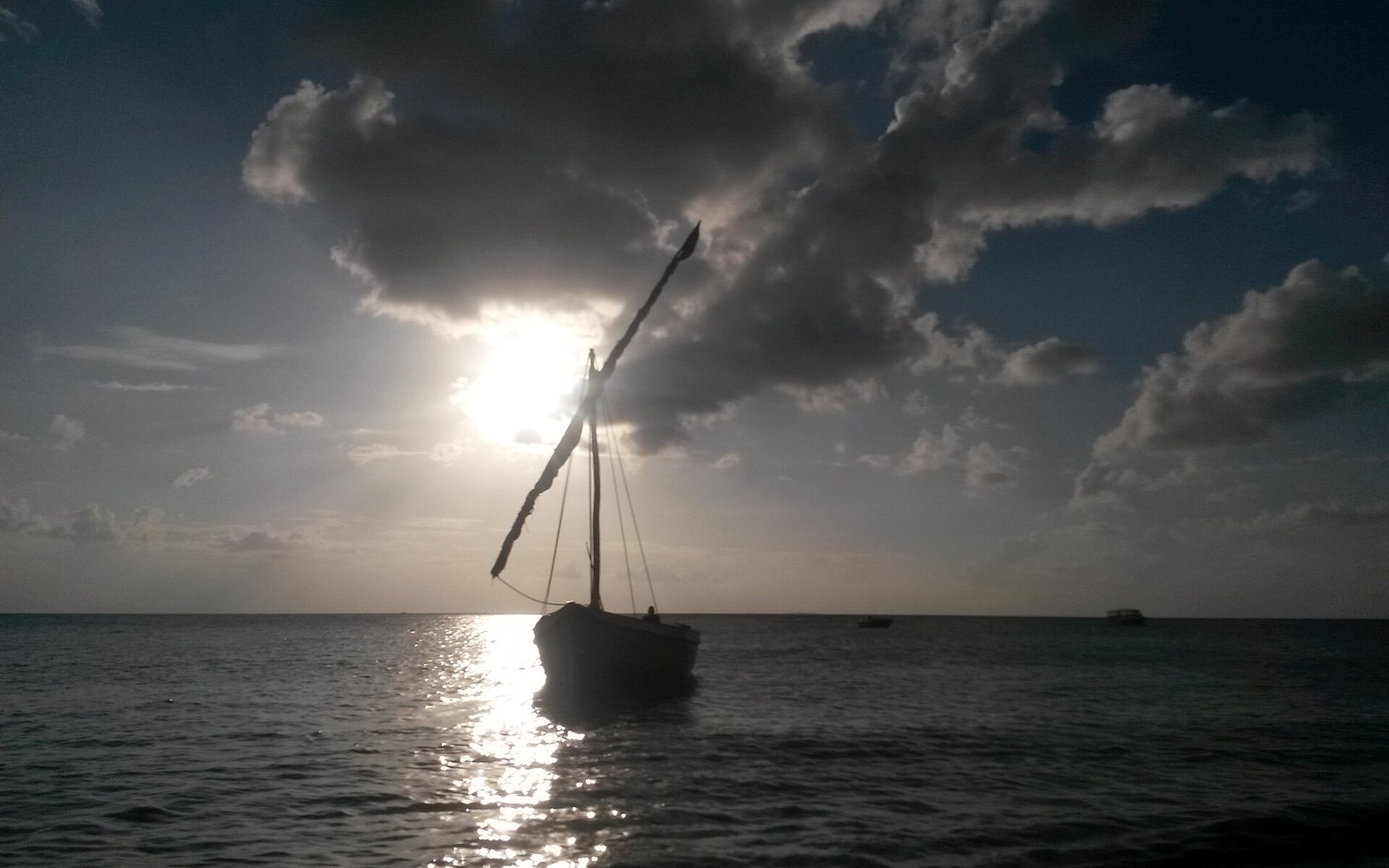
The hull is shallow and flat-bottomed by design, not by limitation. Along a coast studded with sandbanks and coral, depth is a liability. Off Vilankulo, where the channel to the Bazaruto Archipelago drains almost entirely at low tide, a deep-keeled vessel becomes a problem twice a day. A dhow, drawing little water, simply rests on the sand and waits. The construction is lapstrake or carvel depending on the builder and the region; planks are fastened with iron nails rather than the older technique of sewing with coir rope, though the sewn tradition is documented elsewhere in the western Indian Ocean and survives in a few places. Timber is sourced locally where forests allow it, though pressure on coastal mangroves and hardwoods has made some boatbuilders travel further for suitable wood than their predecessors did.
Mozambican dhows are not a single type. The ngalawa is a smaller outrigger variant used close inshore. Larger cargo dhows carry dried fish, coconuts, building materials and sometimes livestock between the mainland and the archipelagos. What they share is the absence of an engine as the primary means of propulsion — though outboard motors have become common on smaller craft, often clamped to a stern that was not designed for one. Working fishermen use them because owning one costs far less than a fibreglass motorboat and requires no spare parts that must come from a city.
The ngalawa is a smaller outrigger variant used close inshore.
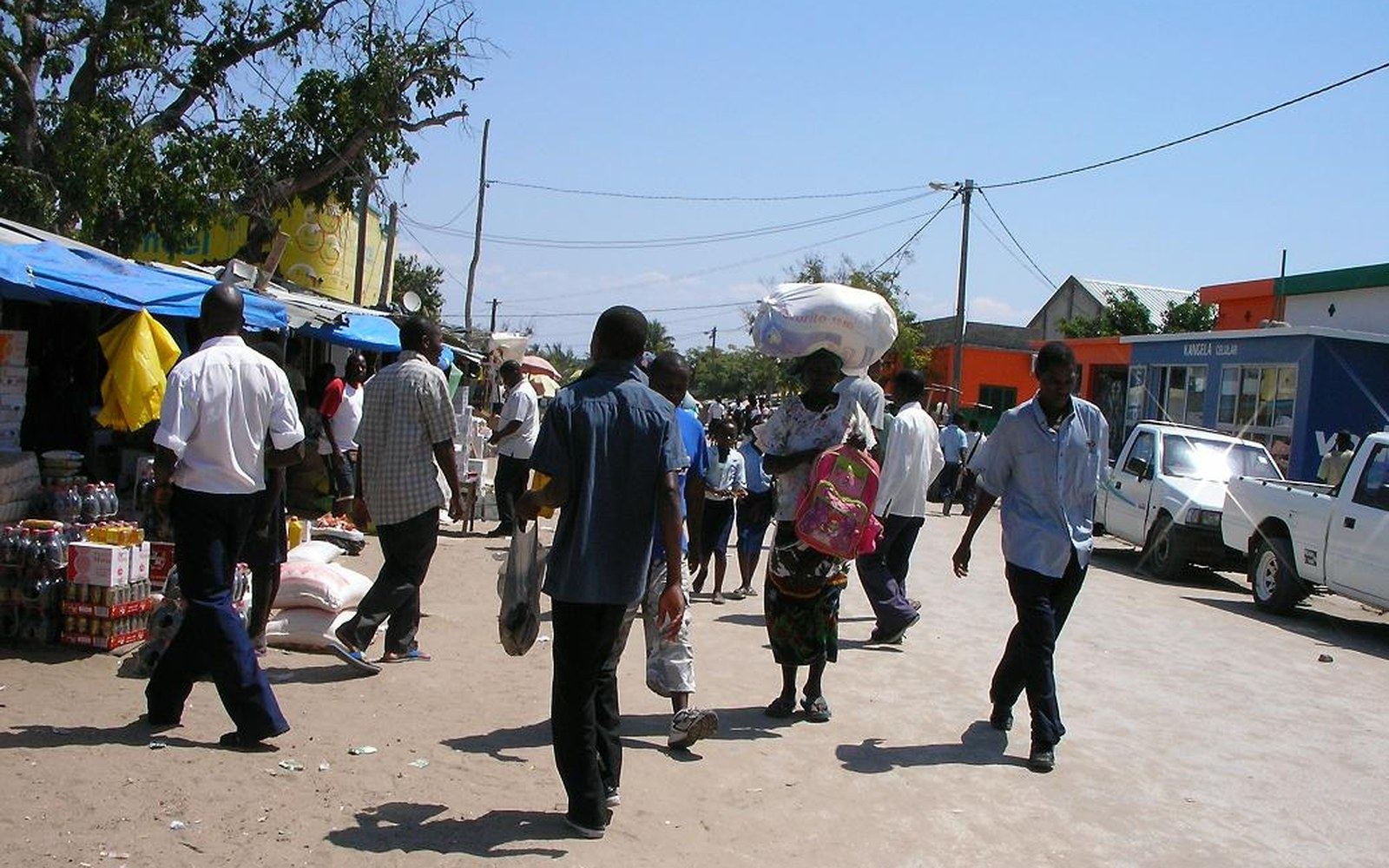
The Quirimbas and the waters around Ilha de Moçambique are where the boat's continued working life is most visible. On Ilha de Moçambique — a World Heritage site that has been a node in the Indian Ocean trade network since before the Portuguese arrived in 1498 — the seafront still operates on dhow time. Boats come in with the morning catch, go out on the afternoon wind. There is no performance in this: it is how the logistics work.
The term "dhow" is itself an anglicisation, probably from the Swahili or Arabic, applied broadly by outsiders. The word's etymology remains debated, though its use across East African and Arab maritime cultures is well documented. Local names on the Mozambican coast are more specific, distinguishing vessels by size and use in ways that the single borrowed word collapses. That imprecision matters less to the boats than it does to the writing about them. The dhow continues because the coast requires it — the tides, the sandbanks, the distances, the economics — and no amount of picturesque description changes what it fundamentally is: a tool, well-matched to the place that made it.
How the rig works with the seasons
- Southeast trade winds
- approximately May–October
- Northwest monsoon
- approximately November–March
- Dhow sailors historically timed voyages around this annual reversal
The Quirimbas and the waters around Ilha de Moçambique are where the boat's continued working life is most visible.