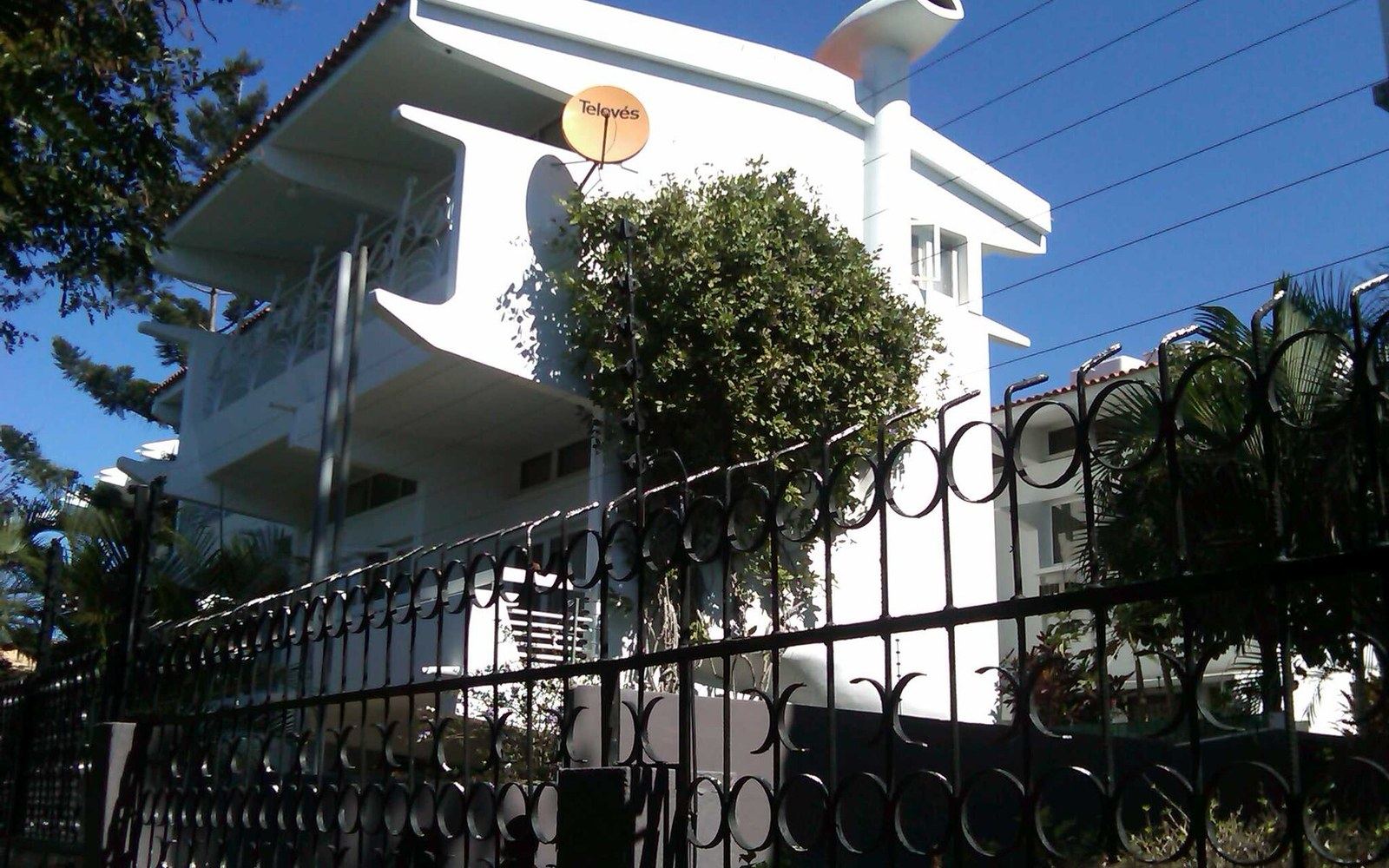
Maputo argues with the light piece 2 of 4
The iron station, and the attribution that stuck
A century of tourist plaques and guidebook certainty, and the real evidence is thinner than the ironwork.
- Terminus completed
- 1910
- Railway operator
- Caminhos de Ferro de Moçambique (CFM)
- City name at completion
- Lourenço Marques (renamed Maputo after independence, 1975)
- Attribution: Gustave Eiffel's office
- widely repeated, not documented in authenticated catalogues
- Structure type
- prefabricated iron and glass, single-nave canopy, copper dome
The building and the claim
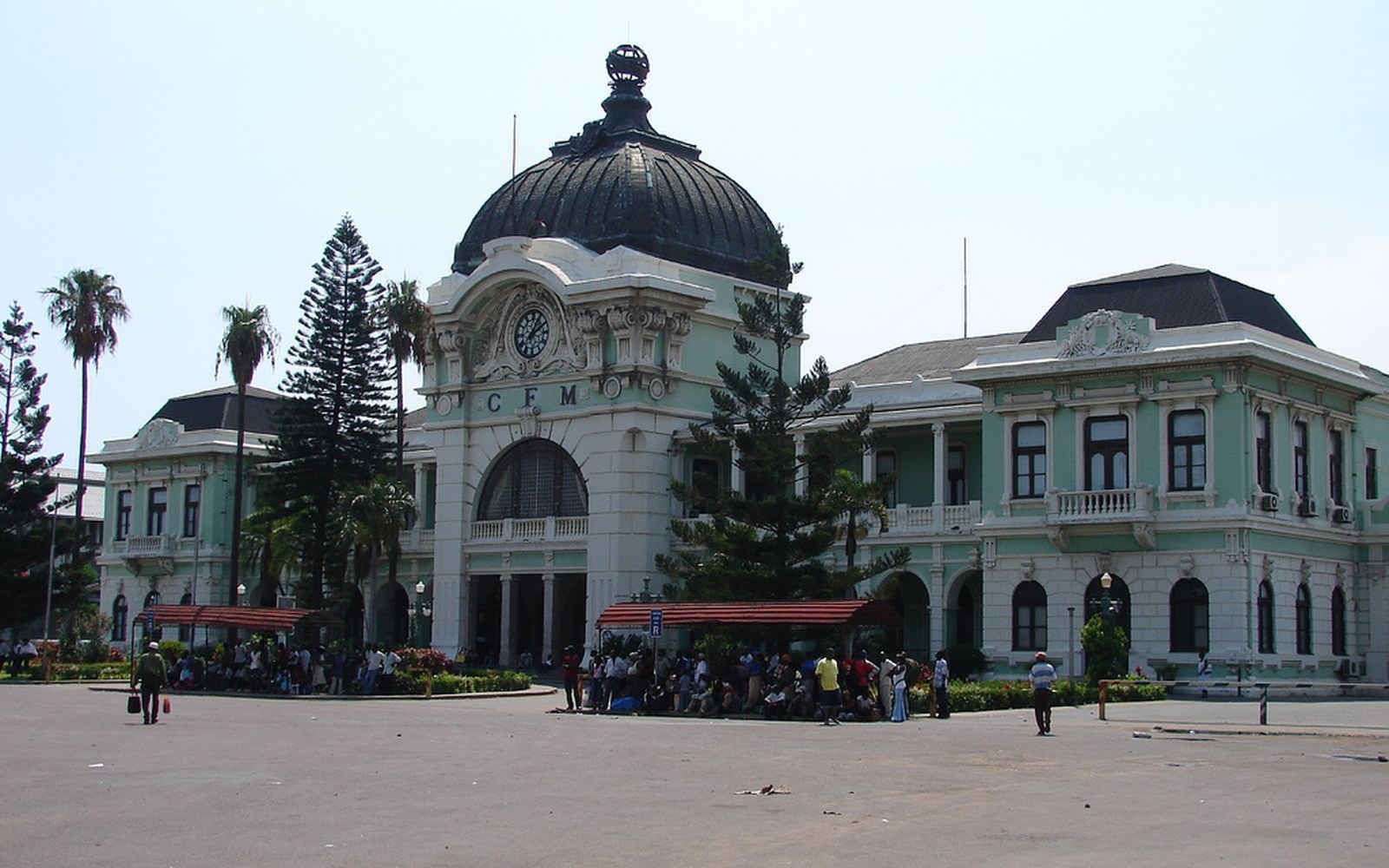
Maputo's railway terminus — the one with the high iron-and-glass canopy, the wrought-iron columns, the dome of verdigris copper — has been described, reliably and repeatedly, as the work of Gustave Eiffel's engineering office. The claim appears in guidebooks, on interpretive panels, occasionally in print journalism. It has the texture of established fact. The building is handsome enough that you want a famous name attached to it, and Eiffel was the most famous name available.
The station serves the Caminhos de Ferro de Moçambique — CFM, the Mozambique railway — and the line it anchors was one of the colonial era's significant engineering projects, connecting the Indian Ocean port to the Transvaal goldfields. The terminus was completed in 1910, when the city was known as Lourenço Marques. It was built to announce something: that this was no provisional port but a permanent gateway, with the ironwork to prove it.
The structure is prefabricated metal, which was common practice for colonial-era public buildings — components manufactured in Europe and shipped out. France and Belgium were the dominant suppliers of this kind of ironwork; Eiffel's office had produced export structures before and would do so again. The logic of the attribution is therefore not absurd. What is missing is documentation. No contract, no signed drawings, no correspondence between the CFM's colonial administration and the Eiffel bureau has been made publicly available to substantiate the claim. The attribution appears to have entered the record, stuck there by repetition, and then been treated as primary evidence for itself.
France and Belgium were the dominant suppliers of this kind of ironwork; Eiffel's office had produced export structures before and would do so again.
What the ironwork actually is
This matters less as a question of credit and more as a question of how cities build their own mythology. Gustave Eiffel died in 1923, and his office's documented export work — markets, bridges, church frames — is on record in French archives. The Maputo terminus does not appear in the catalogues of his authenticated work. That absence is not proof of non-attribution; archives are incomplete and colonial procurement was often undocumented at the point of use. But it is enough to make the certainty unwarranted.
What can be said without dispute is what the building is. The canopy is a single-nave iron structure, the columns slender and decorated with cast foliate detail, the roof glazed to throw diffuse light over the platforms. The exterior dome, copper-clad, sits above the central hall. The style is consistent with late-nineteenth and early-twentieth-century European station architecture of the second rank — elegant, functional, produced for export — and whatever office drew the plans clearly understood how to keep a tropical station cool and adequately lit. That is a genuine achievement, whoever is responsible for it.
Inside, the main hall retains much of its original material fabric. The floor is period tile. The ironwork, painted and repointed at various points, still reads as a coherent whole. The building is listed as a heritage structure under Mozambican patrimony law, which has slowed the more aggressive kinds of modification that stripped other colonial-era stations in the region.
Inside, the main hall retains much of its original material fabric.
A building that precedes its own story
Maputo has a strong tradition of buildings that attract stories larger than their documented history — Pancho Guedes spent twenty years here adding to the city's appetite for architectural mythology, and the station predates him by forty years. The CFM terminus is, in a way, the earliest and clearest example: a building that arrived as ironwork in crates, was assembled on a reclaimed foreshore, and then acquired a provenance that no one had time to question because the building itself was too good-looking to need one.
The dome still turns green above the platforms. The trains still leave on the old gauge. And the Eiffel attribution still appears in print, because correcting a satisfying story takes more effort than repeating it.